
Sustainability in Indian Textiles
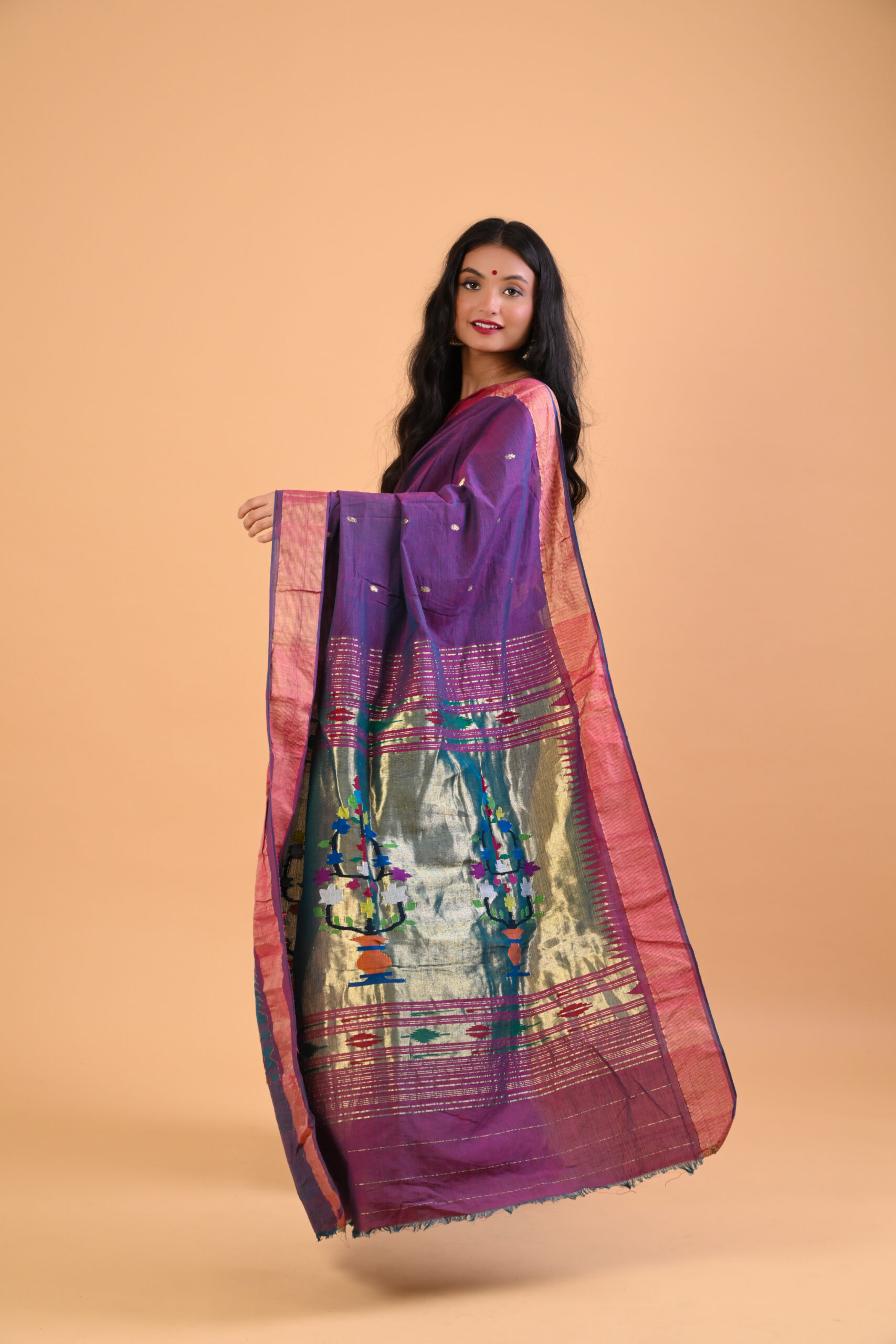
As sustainability becomes a significant focus in the fashion industry, India’s textile traditions stand out for their eco-friendly practices. Handloom sarees, for instance, are inherently sustainable, made with natural fibers like cotton, silk, and wool, and often dyed using natural substances like indigo, pomegranate, and turmeric. The use of handlooms also minimizes energy consumption, making it a greener alternative to mass-produced textiles.
In addition to using natural materials, many traditional weaving techniques are slow-fashion practices, emphasizing quality over quantity. These handwoven pieces are often made to last a lifetime, reducing the need for fast-fashion consumption. Artisans in regions such as Kutch, Varanasi, and Assam are creating textiles that are both sustainable and deeply rooted in Indian heritage.
Supporting local weavers and buying handloom products not only promotes sustainable fashion but also helps preserve these traditional crafts for future generations. The movement towards sustainability is also an economic boon for rural artisans, giving them a platform to showcase their craftsmanship to the global market.



Leave a comment
This site is protected by hCaptcha and the hCaptcha Privacy Policy and Terms of Service apply.